












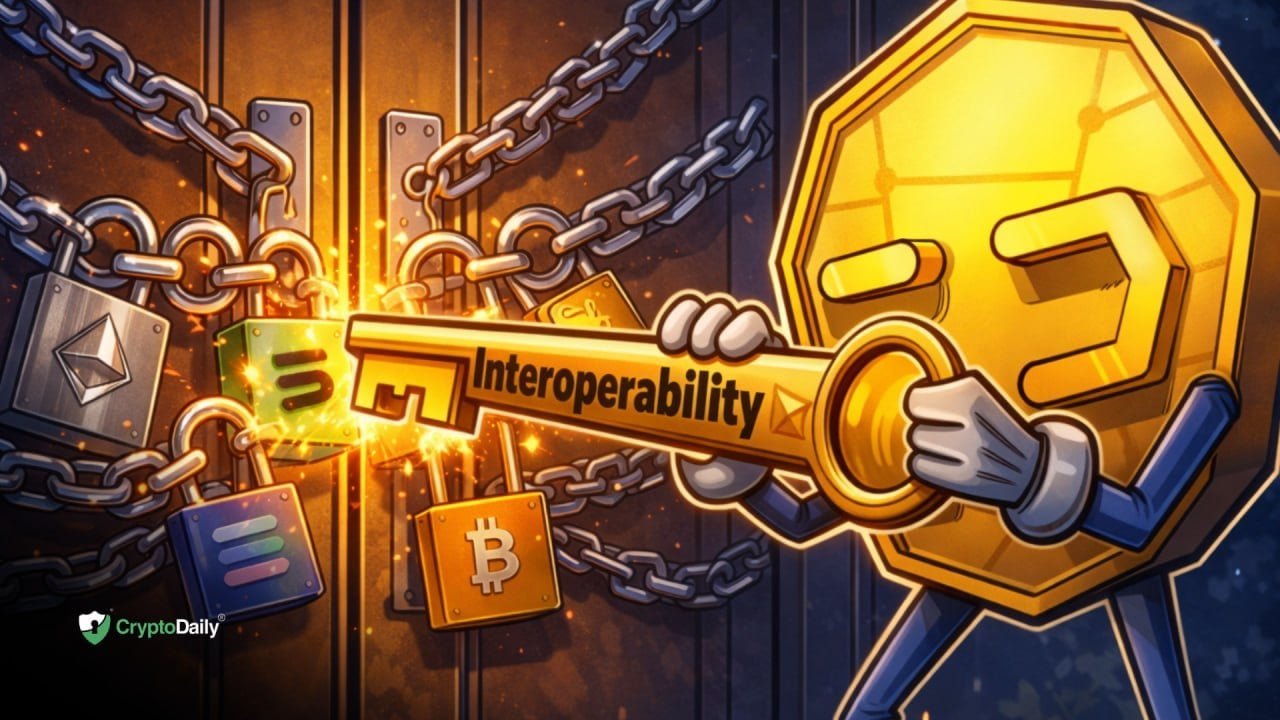
- Blockchain interoperability enables cross-chain communication, transfer of assets, and collaboration.
- Trustless protocols like ZK bridges and IBC improve security and efficiency for cross-chain transfers.
- Developers must understand risks like delays, mismatches, and security vulnerabilities when building with bridges.
Blockchain networks were never designed to talk to each other. Ethereum cannot natively read a Cosmos transaction. Polkadot parachains cannot directly settle assets on Solana. This architectural isolation creates real friction for developers building decentralized applications that need to span multiple ecosystems. Blockchain interoperability addresses this by enabling networks to communicate, exchange data, and transfer assets without relying on centralized intermediaries. Understanding how this works, where it breaks down, and how to build around its limitations is now a core competency for any serious blockchain developer.
Table of Contents
- What is blockchain interoperability?
- Key technologies powering blockchain interoperability
- Performance benchmarks and edge cases in cross-chain transactions
- Developer strategies: Trust, security, and best practices
- A developer's perspective: Where blockchain interoperability is headed
- Connect with blockchain developments and resources
- Frequently asked questions
Key Takeaways
Point Details Interoperability enables cross-chain Blockchain interoperability lets networks communicate, exchange assets, and eliminate silos. Tech choices matter Protocols like XCM, IBC, and ZK bridges shape security, speed, and trust in cross-chain activity. Benchmark real-world performance Transaction latency and anomalies highlight the importance of testing and monitoring beyond whitepapers. Prioritize security Developers should use trust-minimized techniques, rigorous audits, and protocols native to their ecosystems.
What is blockchain interoperability?
At its core, blockchain interoperability is the ability of two or more distinct blockchain networks to exchange information and value in a trustworthy, verifiable way. Without it, each chain is an island. Users and developers must rely on centralized exchanges or custodial wrappers to move assets, which reintroduces the trust assumptions that decentralized systems were built to eliminate.
The problem runs deeper than just different token standards. Blockchains differ in their consensus mechanisms, state models, finality guarantees, and data structures. Ethereum uses a Merkle Patricia Trie for state; Cosmos chains use IAVL trees. Bitcoin achieves probabilistic finality; Tendermint-based chains achieve instant finality. These structural differences mean that networks cannot communicate without a translation layer that both sides can trust.
"Interoperability addresses silos created by heterogeneous consensus, state models, and architectures."
For developers, this matters because the most powerful decentralized applications are not single-chain anymore. A DeFi protocol might source liquidity from Ethereum, settle on an Arbitrum rollup, and use Chainlink oracles bridged from another network. Without interoperability infrastructure, building this kind of application requires unsafe workarounds or massive operational overhead.
Here is what well-implemented interoperability delivers:
- Enhanced scalability: Workloads distribute across chains, reducing congestion on any single network
- Asset mobility: Tokens and NFTs move between ecosystems without custodial intermediaries
- Ecosystem collaboration: Protocols on different chains can compose with each other, expanding what is buildable
- Developer flexibility: Teams can choose the best chain for each function rather than being locked into one ecosystem
- User experience gains: End users interact with a unified interface instead of managing multiple wallets and bridges manually
You can explore the foundational concepts further in this developer interoperability guide and get broader context from this blockchain impact overview. Both resources are worth bookmarking if you are building cross-chain systems in 2026.
Key technologies powering blockchain interoperability
Several distinct technical approaches exist for achieving cross-chain communication, each with different trust assumptions, performance profiles, and ecosystem fit.
Protocol Primary use case Trust model IBC (Cosmos) Token transfers, data relay between Cosmos chains Light client verification XCM/XCMP (Polkadot) Parachain messaging and asset transfers Shared relay chain security Token bridges Cross-ecosystem asset wrapping Varies: multisig to ZK proofs ZK bridges Trustless state proofs across chains Zero-knowledge cryptography
XCM/XCMP on Polkadot works because parachains share the security of the Relay Chain. This means message passing between parachains does not require external validators. The Relay Chain itself guarantees ordering and finality, making XCM one of the more security-efficient approaches for intra-ecosystem communication.
ZK bridges and intent-based systems like EIP-7683 represent the frontier. Rather than relying on a set of validators to attest to events on another chain, ZK proofs let one chain cryptographically verify the state of another. This eliminates the trusted third-party assumption that makes traditional bridges so vulnerable.
Here is a simplified workflow for a cross-chain asset transfer using a bridge:
- User initiates a transfer on the source chain, locking assets in a smart contract
- Relayers or validators observe the lock event and generate a proof
- The proof is submitted to the destination chain's verification contract
- Upon successful verification, wrapped or native assets are minted or released to the recipient
- Finality on both chains is confirmed, completing the transfer
This process sounds clean in a whitepaper. In practice, step 3 is where most exploits and delays occur, which is why protocol selection matters enormously.
For deeper context on how these layers interact, the blockchain layers explained article breaks down the architecture that underpins these systems.
Pro Tip: Use native protocols like IBC or XCM for tasks within their respective ecosystems. Reserve third-party bridges for cross-ecosystem connectivity, and always audit the bridge codebase before integrating it into a production application.
Performance benchmarks and edge cases in cross-chain transactions
Theory is one thing. Empirical data tells a more complicated story.
A large-scale benchmark analysis of cross-chain bridges covering over 11 million transactions and $28 billion in volume across 11 chains found that most transfers complete within minutes. However, outliers existed with completion times exceeding 200 days, driven by protocol bugs, chain reorganizations, and manual intervention requirements.
Metric Observed range Notes Typical completion time 2 to 30 minutes Depends on chain finality speed Outlier completion time Up to 200+ days Rare but documented Transaction volume analyzed $28B across 11 chains 11M+ transactions Amount mismatch rate 1.83% of transactions Risk of partial loss
That 1.83% mismatch rate deserves attention. It means that in nearly 1 in 55 transactions, the amount received does not match the amount sent. For retail users this is confusing. For protocols relying on cross-chain accounting, it can cascade into larger financial discrepancies.
Ledger inconsistencies and arbitrage bots compound this problem. Automated bots monitor bridge activity and exploit timing windows between source-chain locks and destination-chain mints. This is not a theoretical vulnerability. It has caused documented losses and protocol-level anomalies across multiple bridge implementations.
Common pitfalls developers should watch for:
- Amount mismatches: Fee deductions mid-transfer cause recipient amounts to differ from sender amounts
- Unexpected delays: Chain reorganizations or validator downtime can stall transfers for hours or days
- Arbitrage exploitation: Bots front-run or sandwich bridge transactions during high-volume periods
- Finality mismatch: Source chain considers a transaction final while destination chain has not yet confirmed
- Liquidity gaps: Some bridges run out of destination-side liquidity, causing queued or failed transfers
Understanding these failure modes is not optional for developers. You can learn more about how blockchain transparency mechanisms affect bridge auditability, and review how arbitrage dynamicsplay out in practice.
Developer strategies: Trust, security, and best practices
Security is not a feature you add to a cross-chain application. It is a constraint you design around from the start.
Bridges and relay networks are prime targets for exploits. The economic divergence between infrastructure investment and actual usage creates asymmetric risk. A bridge securing $500 million in assets might run on code audited once two years ago. That gap is where attackers operate. Light clients and zero-knowledge proofs reduce this risk by removing the need to trust a validator set entirely.
Three actionable best practices for developers building cross-chain applications:
- Prefer trust-minimized verification. Use light client proofs or ZK proofs wherever the target ecosystem supports them. Multisig bridges should be a last resort, not a default choice.
- Measure end-to-end latency against realistic service level objectives. Do not assume that because a bridge advertises 5-minute transfers, your application can depend on that. Measure real-world latency tied to chain finality and build in appropriate timeouts.
- Audit bridge codebases before integrating. A bridge that has not been audited in the past 12 months is a liability. Require recent third-party audits and monitor for live exploit disclosures.
Pro Tip: Always monitor the economic security of any bridge you integrate. If the value locked in a bridge significantly exceeds the cost of corrupting its validator set, that bridge is a target. Reassess integrations when that ratio shifts.
Economic divergence is a subtler risk. Infrastructure does not equal usage. A well-funded bridge protocol can still have thin real-world adoption, meaning its security assumptions were never stress-tested at scale. Governance structures and upgrade mechanisms matter too. A bridge that can be upgraded without a time-lock is a bridge that can be exploited through governance.
Future-proofing also means thinking about quantum threats. Current ZK proof systems rely on cryptographic assumptions that quantum computers could eventually challenge. Staying current on post-quantum cryptography developments is part of responsible cross-chain development in 2026.
For further reading, the crypto security best practices guide covers asset protection fundamentals, while blockchain security pillars explains the architectural foundations. The blockchain scalability guide is also relevant for understanding how cross-chain design intersects with performance constraints.
A developer's perspective: Where blockchain interoperability is headed
The mainstream narrative around interoperability tends toward optimism. Seamless cross-chain experiences, unified liquidity, frictionless asset movement. The reality is more demanding. Every interoperability solution involves a trust assumption somewhere, whether it is a validator set, a cryptographic primitive, or a governance mechanism. Pretending otherwise leads to underestimated risk.
Empirical benchmarks and documented edge cases, like the 1.83% mismatch rate and 200-day outlier delays, are more instructive than any protocol whitepaper. They reveal where the theory breaks down under real conditions.
Modular chains, hybrid trust setups, and intent-driven systems like EIP-7683 are already outpacing legacy bridge architectures. These approaches distribute trust more granularly and adapt to specific use-case requirements rather than forcing every transfer through a one-size-fits-all model.
Interoperability is a moving target. Success means expecting, measuring, and learning from the edge cases most guides overlook. Developers who treat it as a solved problem will be the ones caught off guard. The developer guide to interoperability and the broader discussion of why blockchain mattersin 2026 are good anchors for staying grounded in what is actually working.
Connect with blockchain developments and resources
Staying current on cross-chain infrastructure is not a one-time exercise. The protocols, security models, and best practices shift as ecosystems mature and new vulnerabilities surface.
Crypto Daily tracks these developments continuously, covering everything from protocol upgrades to exploit post-mortems. Whether you are looking for practical interoperability developer tips, a deeper look at unlocking blockchain trust in today's ecosystem, or just want to stay on top of the latest crypto news and updates, the platform provides the analysis and context that developers and tech enthusiasts need to make informed decisions in a fast-moving space.
Frequently asked questions
How does blockchain interoperability improve asset transfers?
Interoperability removes the need for centralized intermediaries by enabling direct cross-chain communication, allowing assets to move between networks through verifiable on-chain protocols rather than custodial wrappers.
What are the biggest security risks with cross-chain bridges?
Bridges are prime exploit targets because they concentrate high asset value behind code that is often under-audited. Developers should favor light client verification or ZK proofs over multisig validator models wherever possible.
Why do cross-chain transactions sometimes experience delays or mismatches?
Ledger inconsistencies and arbitrage bots are frequent causes, along with chain reorganizations, finality mismatches between source and destination chains, and occasional liquidity shortfalls on the receiving side.
Should developers always use bridges for interoperability?
No. Native protocols like IBC within Cosmos or XCM within Polkadot offer stronger security guarantees within their ecosystems. Bridges are appropriate for cross-ecosystem connectivity but require rigorous auditing before production use.
Recommended
- Achieve blockchain interoperability: a practical developer guide - Crypto Daily
- Blockchain layers explained: Roles and impact in 2026
- Why blockchain matters: unlocking trust in 2026
- Aster Chain Launch: Defining a New Era for Onchain Privacy and Transparency - Crypto Daily
Disclaimer: This article is provided for informational purposes only. It is not offered or intended to be used as legal, tax, investment, financial, or other advice.